


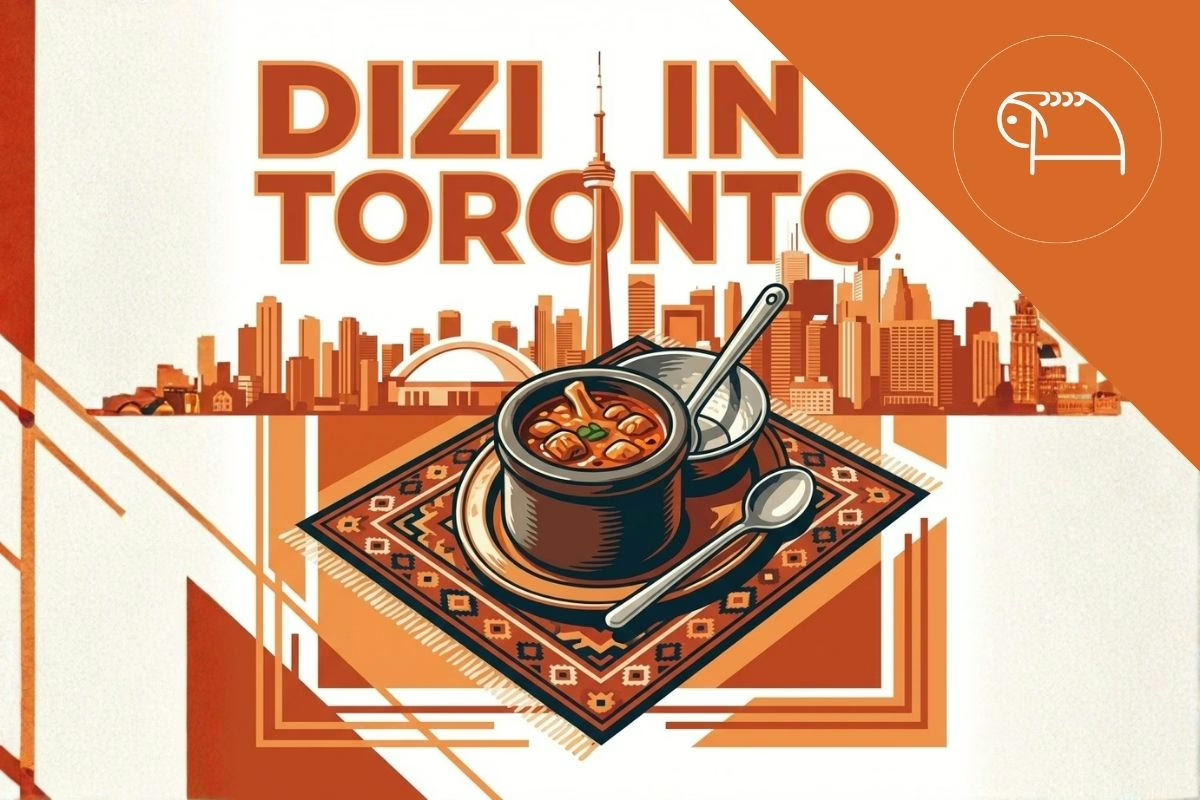
If you love rich, slow-cooked comfort food, Dizi (also known as Abgoosht) is one Persian dish you shouldn’t miss. It’s hearty, nourishing, and deeply traditional — and it’s also one of the most “interactive” meals in Iranian food culture, because it’s typically enjoyed in two parts: the broth first, then the mashed meat-and-legume mixture.
At Bareh Sefid in Richmond Hill (Toronto area), we serve Dizi as a true Persian comfort dish — slow-cooked, deeply flavorful, and meant to be enjoyed the classic way.
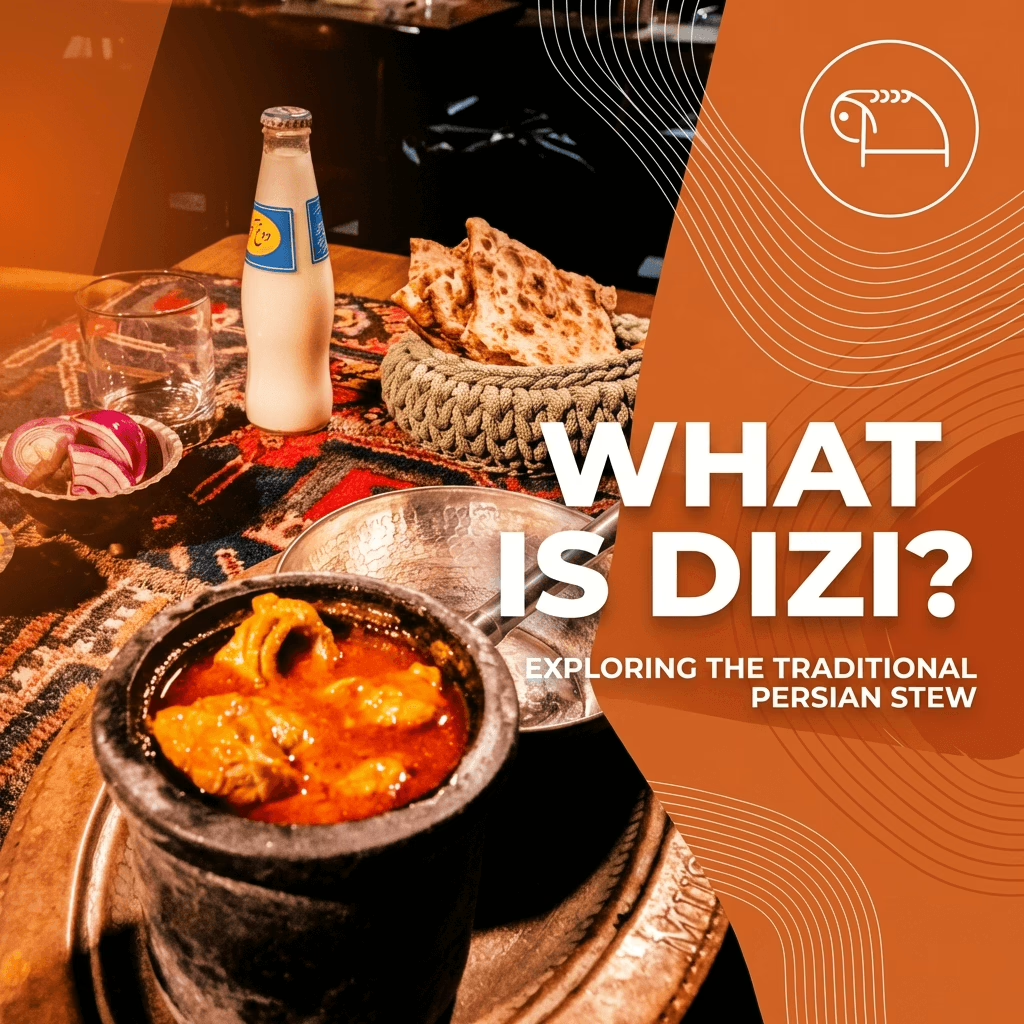
What Is Dizi (Abgoosht)?
Abgoosht literally refers to the “meat broth,” while Dizi is commonly used to describe the dish as a whole — historically associated with the traditional serving pot (often a small stone or clay vessel). In practical terms, it’s a slow-cooked Persian lamb stew built around a few core ingredients:
lamb (often with bone for richer flavor)
chickpeas
white beans
potatoes
onion
tomatoes / tomato paste
turmeric and warming spices
dried limes (limoo amani) for depth and aroma
What makes it special isn’t only the ingredient list — it’s the method: slow cooking brings out a deep broth, tender meat, and a thick, satisfying mash for the second course.
Why Dizi Is Different from “Just Another Stew”
Lots of cultures have stews. Dizi stands out because it’s both:
- a broth-based soup experience, and
2. a mashed, spreadable main (often called “goosht-e koobideh” in the Abgoosht context) — created by mashing the solids with a traditional masher.
That “two-texture” style means Dizi feels like a full meal journey, not a single bowl.
How Dizi Is Traditionally Served (The Two-Course Ritual)
Step 1 — The broth (“āb-e goosht”) + bread
Traditionally, the broth is served first. Many people tear pieces of Persian flatbread (like sangak/lavash) into the broth to soak up flavor — a style often described as tilit (bread soaked in broth).
Why it matters: this is where the dish’s aroma and warmth hit first — it’s comforting and intensely savory.
Step 2 — Mash the solids (“goosht koobideh” style)
After the broth, the meat, beans, chickpeas, potatoes, and tomatoes are mashed together using a traditional masher. The result is thick, hearty, and usually enjoyed with bread, herbs, onions, and pickles.
Pro tip: If you’ve never tried it before, mash a little at a time and taste — you’ll notice how the texture changes the whole experience.
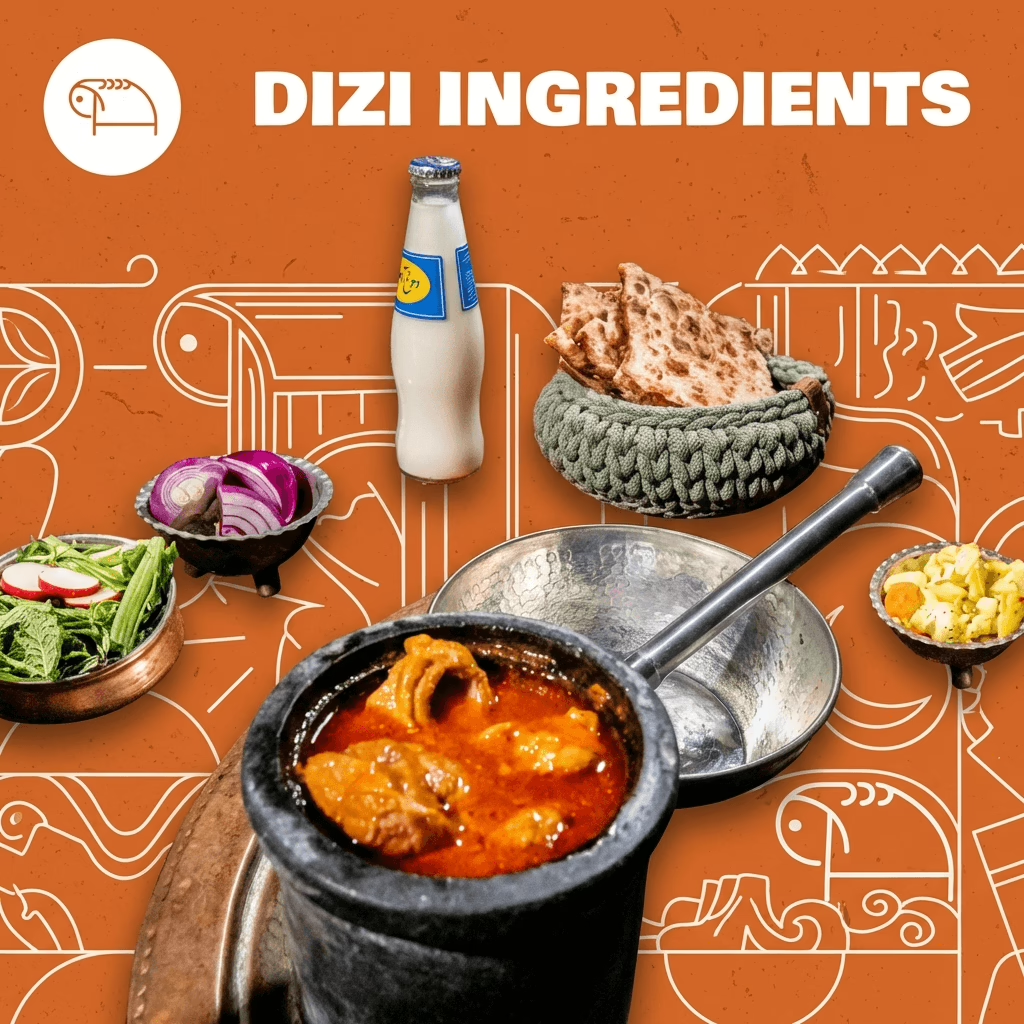
Ingredients Breakdown (So You Know What You’re Ordering)
Below is a practical table you can include in your blog for “featured snippet” potential:
Component | What it adds | Why people love it |
|---|---|---|
Lamb (often bone-in) | Deep broth + tender bite | Rich flavor, satisfying |
Chickpeas + white beans | Body + mild sweetness | Hearty, filling |
Potatoes | Creaminess when mashed | Comfort-food texture |
Onion + tomato paste | Base depth | Balanced savory flavor |
Turmeric + spices | Warm aroma | “Cozy” taste profile |
Dried limes (limoo amani) | Tangy complexity | Signature Persian note |
Dizi vs. Abgoosht — Are They the Same?
People often use them interchangeably, but here’s the simplest, most accurate way to explain it on your site:
Abgoosht emphasizes the broth and the dish itself.
Dizi is often used for the traditional serving style (and sometimes the pot) — many restaurants market it as “Dizi (Abgoosht)” so everyone understands.
What Does Dizi Taste Like?
If you’re trying to describe it for someone who’s never had Persian food:
Broth: savory, lamb-forward, warming, lightly spiced (not spicy-hot)
Mash: hearty, creamy, protein-rich, with a comforting “slow-cooked” depth
If your audience likes:
bone broths
slow-cooked lamb dishes
hearty winter soups
…they’ll usually love Dizi.
How to Eat Dizi Like a Regular (Not a Tourist)
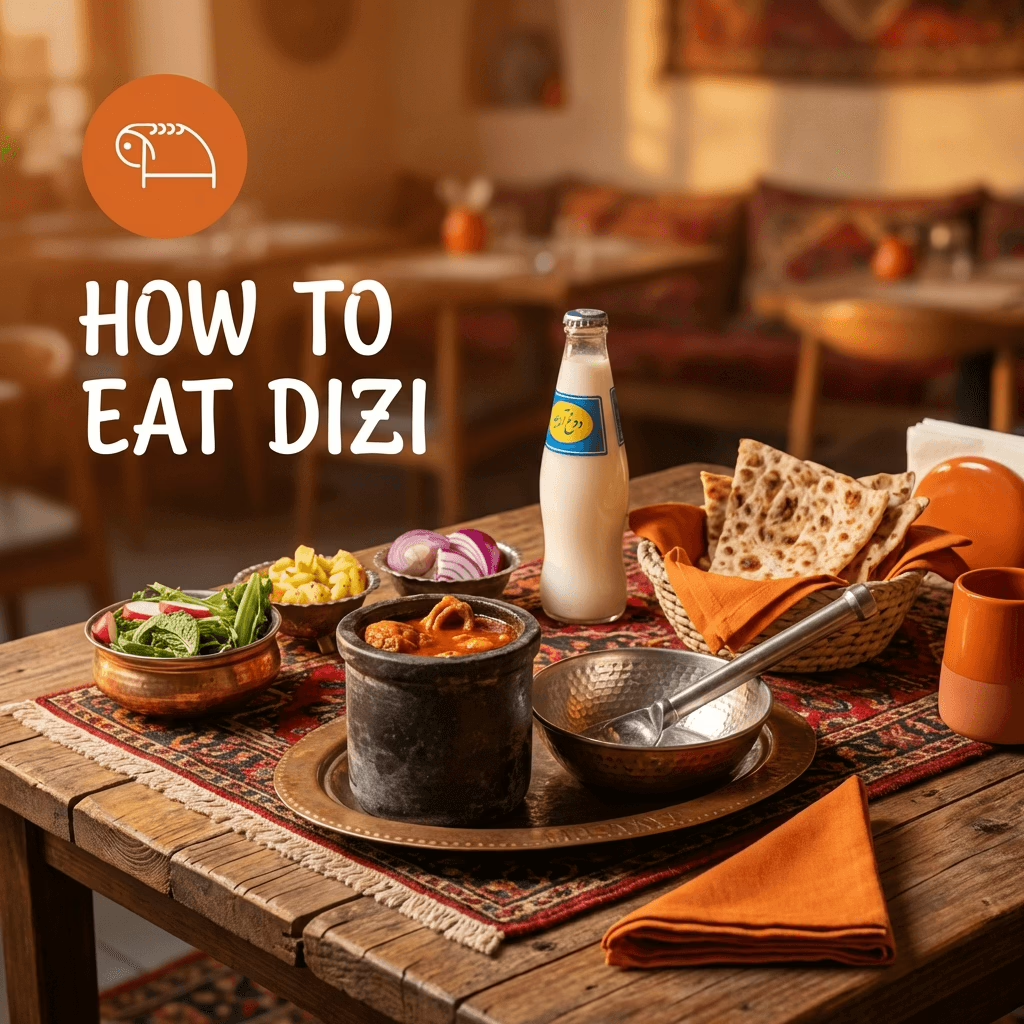
Here’s a short checklist that reads “local” and keeps people on the page:
- Start with the broth — sip first, then add bread if you like.
2. Add raw onion (if available) — it cuts richness beautifully.
3. Mash the solids gradually; don’t over-mash from the start.
4. Alternate bites: a little mash, a little broth — it keeps the palate fresh.
5. Pair with pickles (torshi) and fresh herbs for a classic Persian balance.
Why Dizi Is a Popular Persian Breakfast (Yes, Breakfast)
In Iranian culture, many hearty dishes are enjoyed earlier in the day — especially on weekends. Dizi fits that tradition because it’s warm, filling, and slow-cooked (often starting early). That’s also why you’ll see it alongside other Persian breakfast favorites like Halim and Kaleh Pacheh on some menus.
Try Dizi (Abgoosht) at Bareh Sefid in Richmond Hill
If you’re near Richmond Hill and looking for authentic Persian comfort food, Dizi is one of the most traditional dishes to start with — especially if you want something warm, hearty, and different from the usual restaurant options.
📍 Address: 9325 Yonge St Unit 13, Richmond Hill
📞 Call ahead for availability (recommended on busy mornings)
Add a Comment